Managing your Scrap & Getting that bacon
$$$
$$$
Want to make some extra cash? Learn how to categorize, process, store and send your various scrap types in to the refiner to clear up some bench space and earn some money while doing it. There’s a lot of steps, but none of them are hard. Let’s get into it!
STEP 1: AQUIRE YOUR TOOLS
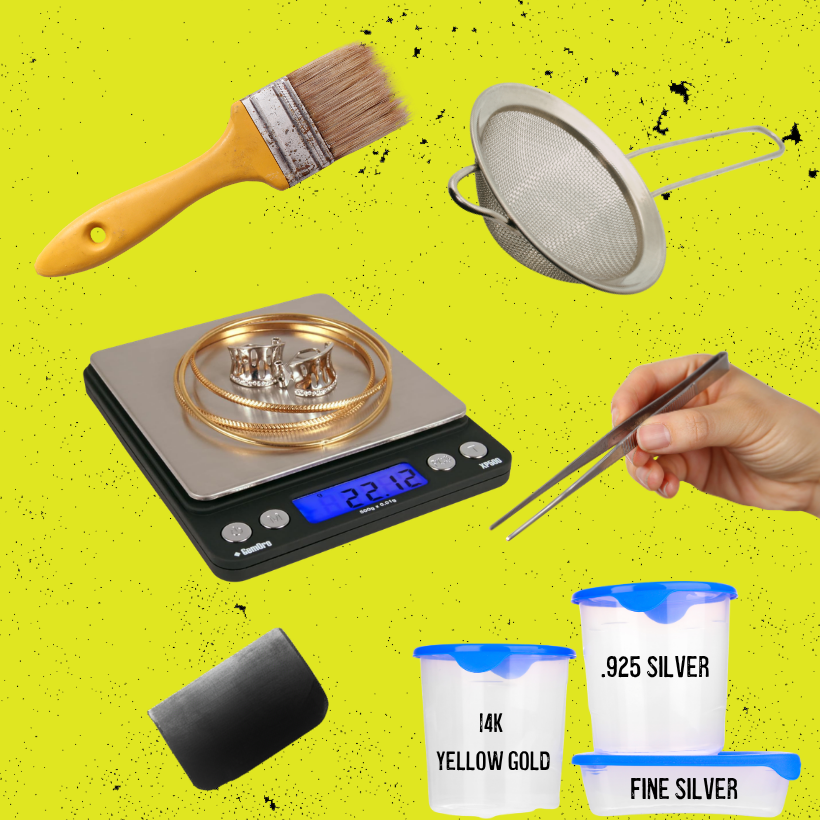
STUFF YOU NEED:
Magnet for removing steel
Brush for sweeping up filings/grindings
Tweezers for grabbing larger clean scrap
Mesh Strainer for sifting trash from filings and grindings
Containers (LABELED) for storing your various scrap
STEP 2: IDENTIFY YOUR SCRAP TYPE
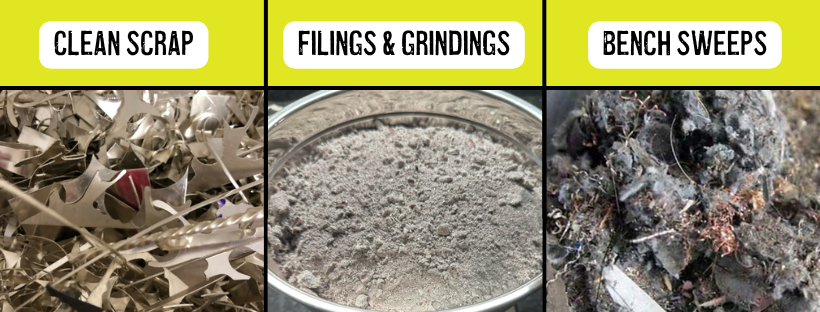
Every refiner is going to have slightly different terminology for each of these scrap types, so pay more attention to the descriptions than the terms used to categorize them.
Clean Scrap:
Bits of cutoff wire, unusable scraps of sheet metal, failed projects (single metal type)
Filings & Grindings:
CLEAN dust from sawing, filing or grinding. (No tape, fingernails, hair, polishing compound, saw blades, sandpaper etc.)
Bench Sweeps:
Dirty paper towels from cleaning up your studio, used sandpaper, spent polishing wheels, old ventilator filters, vacuum contents, ultrasonic sludge, broken crucibles, mixed mystery metal dust etc.
STEP 3: PROCESS YOUR SCRAP
Separate your scrap into each category (clean scrap, filings & grindings, and bench sweeps) following the steps below.
Use a magnet to pull out any bits of steel like saw blades or steel wool (toss them into your refiner bucket! These are considered “bench sweeps”)
Pull out any clean scrap like metal cut offs, bits of wire, etc. and place in a labeled container. If working in silver, make sure to separate sterling from fine silver if possible
Sweep up what remains and use a mesh strainer to sift out any trash like sandpaper scraps, paper, tape etc. (toss trash into your refiner bucket! These are also considered “bench sweeps”)
What’s left are now filings and grindings. Use a brush to sweep them up and store them in a separate container labeled with the metal type.
If you’re working in multiple metal types like brass, silver and gold, you will want to make sure you clean your bench between each project and keep each material’s scrap separate and clearly labeled. (e.g. if working in various gold types, you’ll want to indicate both the carat and the color.)
As a note, many refiners wont accept base metals like brass & copper; but, if you ever work with precious metals, your bench sweeps still have value even if you sometimes work in base metal. Every time you clean your bench, there are tiny bits of precious metal that are mixed up with whatever else is on your bench and they are worth something—so don’t throw them out!
STEP 4: SHIP TO THE REFINER
Sending your scrap in can feel overwhelming at first, (remember, different companies may use different terminology) so knowing how to identify, process and store your scrap will help you know where to send it.
Below are a handful of refining companies organized by the types of scrap they will accept. Some require that you create an account with them to send in your scrap while others do not. Don’t feel shy about giving them a call to learn more about their requirements.
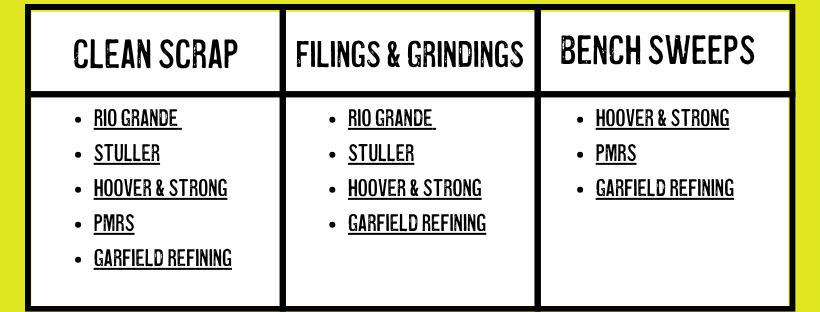
Click the image to access links to each company
Ready to make some money?
Find a refiner who will accept your scrap (hint: use the list above!)
Pack your clean scrap and filings & grindings into separate secure plastic bags, clearly labeled with the metal and scrap type (might be a good idea to double bag any pokey materials). Bench sweeps will be handled differently. We use PMRS, who will send you a special bucket free of charge that you can toss all of your bench sweeps into until you are ready to mail it back to them. No need for bags and labels!
Weigh each bag with your jeweler’s scale and mark it with the amount
Fill out the refiner’s required packing slip for your scrap (Here is an example from Stuller)
Calculate your estimated scrap value using a scrap calculator
Carefully pack your scrap into a discreet padded envelope or box
Purchase a shipping label and include insurance on your package for the estimated value (*PMRS will send you a free shipping label with your bucket!)
Mail that sucker out!
STEP 5: ROLL IN THE DOUGH! $$$

Key notes to keep in mind
The price of metal the day your scrap is processed will determine the value of your scrap — NOT the day you shipped it. Your payout might be more or less than you anticipated based on fluctuations in the metal market.
There will almost always be a processing fee which will be deducted from your payout. Some refiners have higher fees than others, so shop around for the best price!
Depending on the company you use, you might be able to request a credit to your account in lieu of a check. Usually a credit will be of higher value and can help you save money on supplies/materials you were already planning to purchase.
DON’T BE AFRAID TO REACH OUT to these companies—It’s literally their job to help explain this process to you. You are helping their business just as much as they are helping you!
Still feeling overwhelmed? Book a private lesson with us to work through the process step by step with an experienced instructor.